DataboxAI - IIoT Platform
Product Design
Web Based

Confidentiality Notice
To respect client confidentiality and non-disclosure agreements, some branding, data, technical information, graphics, and interface content have been replaced or anonymized. These changes do not alter the design approach, user experience, or product capabilities presented in this case study.
PHASE 1 focused on building a Digital Twin platform specifically for SPRINGER, a manufacturer of automated lumber mill equipment. The objective was to provide SPRINGER’s customers with an interactive visualization of their production plants, allowing operators to monitor every machine, production zone, inventory area and process through a real-time digital representation connected to sensors and operational data. The platform combined Digital Twin technology, customizable dashboards, AI-assisted insights and machine monitoring into a single interface capable of supervising an entire production facility.
PHASE 2 expanded this concept beyond the lumber industry. Instead of being tied to SPRINGER machinery, the platform was redesigned as a modular Industrial IoT solution that could be adopted by manufacturers across different industries. Every customer could define its own production layout, equipment, sensor ecosystem, business logic and operational workflows. Through configurable parameters, dynamic Digital Twin generation, customizable widgets and flexible integrations, the platform became adaptable to virtually any manufacturing environment, regardless of the machines, automation systems, inventory structures or connected services used by each client.
Springer wanted to move beyond selling machinery and provide additional value to customers through a digital platform capable of monitoring production in real time. As the vision evolved, the challenge expanded into designing a flexible IIoT platform that could support different manufacturers, production layouts, machine ecosystems, and sensor integrations without rebuilding the product from scratch.

Before exploring interface concepts, we needed to understand how the platform would operate across multiple stakeholders, industrial systems, and business processes. Together with product owners and developers, I mapped the platform architecture, analyzed the production workflow, documented integrations, and identified the responsibilities and limitations of every user role. This discovery phase established the foundation for all subsequent design decisions.


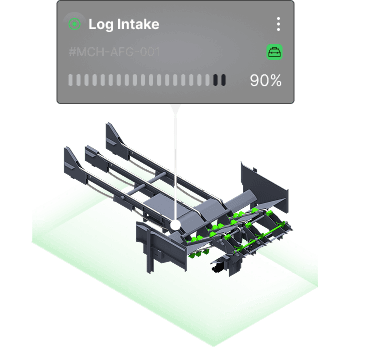
The platform combines an interactive digital twin with real-time operational data, allowing users to monitor and navigate the manufacturing facility through a spatial representation of its assets. Instead of relying on disconnected dashboards, operators interact directly with machines, production lines, and utilities to access contextual information.
By combining live status indicators, contextual overlays, and asset-based navigation, the interface transforms complex industrial data into actionable insights. This approach improves situational awareness, reduces cognitive load, and enables faster, more informed operational decisions.
Configurable Digital Twin
Creating a digital twin is not a one-size-fits-all process. Depending on the client’s available assets ranging from CAD models and architectural drawings to photos or existing layouts. We collaborated to determine the most suitable visualization strategy, balancing implementation effort, accuracy, and cost.



The platform combines responsive design, modular architecture, and asset-driven interactions to support a wide range of manufacturing environments. The following highlights summarize the key principles and capabilities that shaped the overall user experience.
Fully responsive
Optimized layouts from ultra-wide control room displays (4K+) to desktop, tablet, and mobile devices.


Digital Twin Control HUD
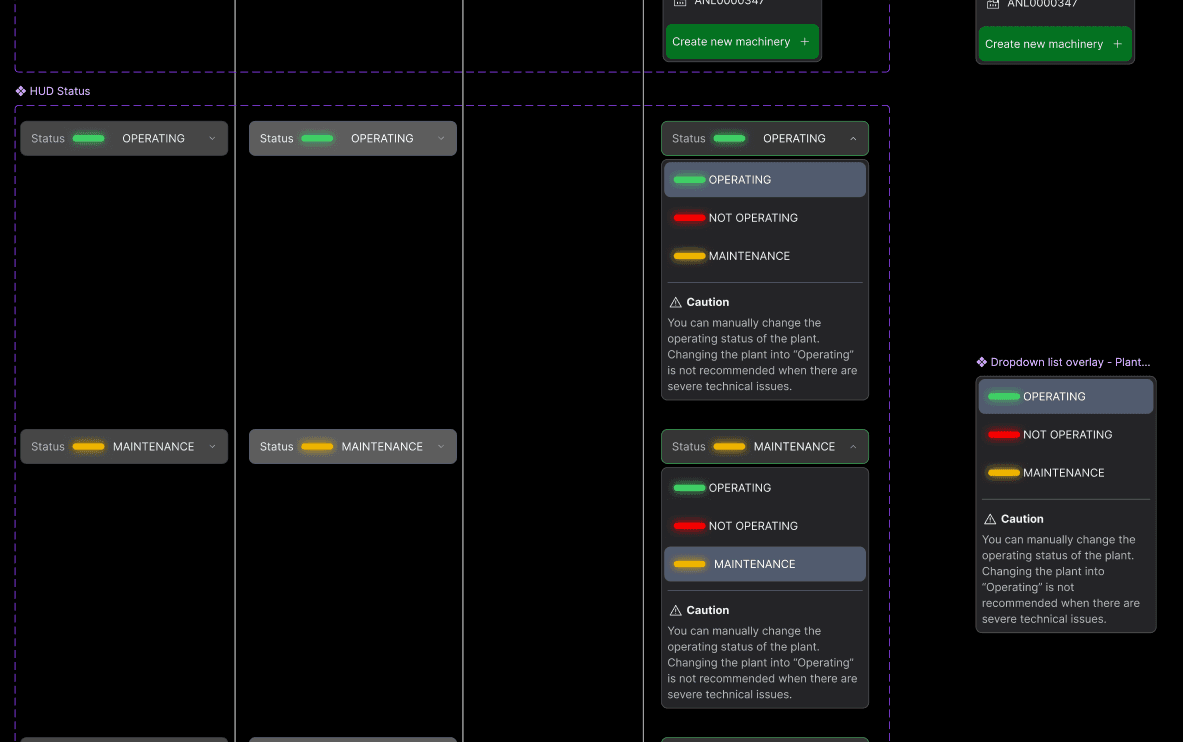
The HUD provides real-time interaction with the digital twin, enabling users to navigate the facility, control visualization layers, inspect assets, and monitor operational states through a single contextual interface. By keeping controls close to the visualization, users can perform complex tasks with minimal context switching.

Digital Twin Main Panel (2D representation)

Organizations and Plant Configuration
The platform was designed to support large manufacturing organizations operating across multiple business units, locations, and production facilities. To reflect this organizational structure, users can create hierarchical instances—from organizations and sites down to individual plants. At the center of this hierarchy is the Plant, the core entity where the Digital Twin is configured, assets are managed, and operational data is visualized.

Downtime - Data Visualisation
The Plant Overview prioritizes operational awareness through an interactive production timeline. Instead of displaying uptime as a single metric, it visualizes every downtime event, categorizing planned and unplanned interruptions while providing the context, cause, and resolution behind each event.

Plant View Widget - Data Visualisation
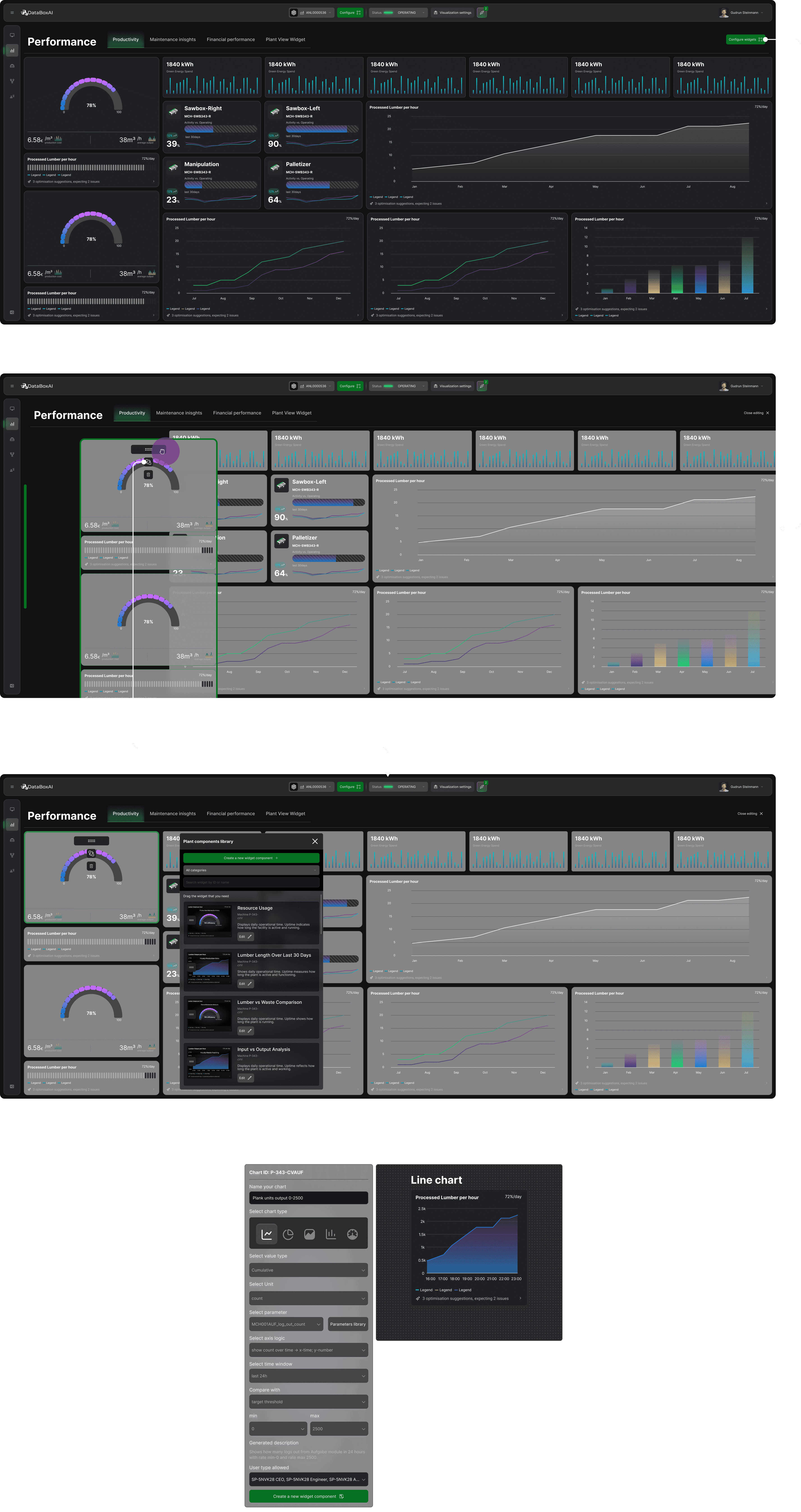
Performance widgets are fully configurable, allowing each manufacturer to tailor the Plant Overview to their operational priorities. Whether the focus is production efficiency, energy consumption, financial KPIs, quality metrics, or maintenance, users can compose dashboards using modular widgets to surface the data that matters most to their business.

Configurable Analytics Engine
Rather than hardcoding charts to specific sensors or machines, the platform introduces a reusable parameter library that standardizes industrial data across the entire ecosystem.
Each parameter defines not only its data source, but also its value type, aggregation rules, units, thresholds, tags, and machine context. This abstraction allows dashboards and widgets to be configured using business-friendly parameters instead of raw sensor values, making analytics reusable across different plants, machines, and manufacture

Maintenance Catalog - Identification system
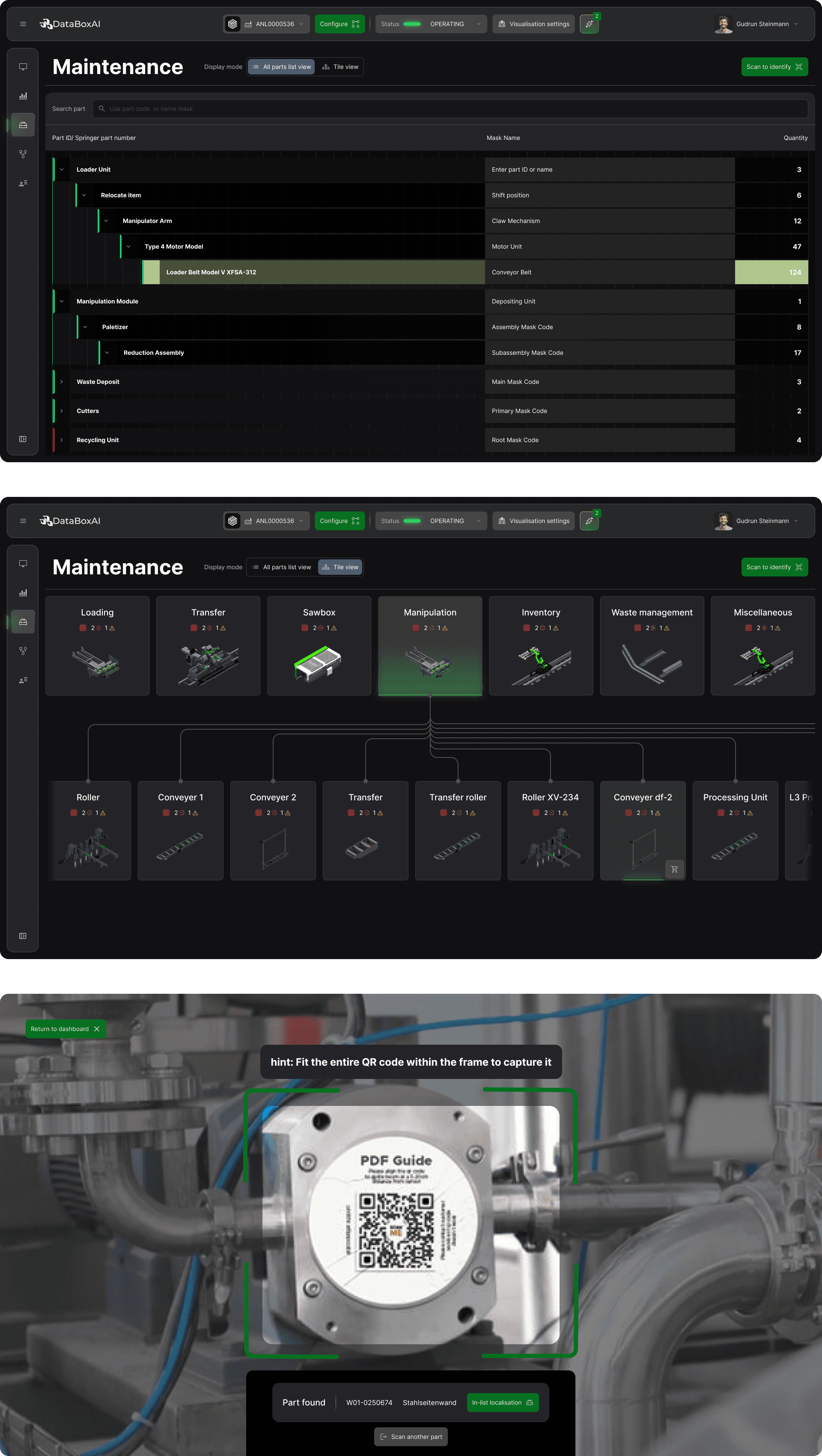
The Maintenance Catalog bridges the gap between the digital twin and spare parts management. Instead of browsing a generic parts database, operators access a catalog synchronized with their specific plant configuration, ensuring they only see components relevant to their installed machinery.
Parts can be located by navigating the equipment hierarchy or instantly identified by scanning a QR code attached to a machine module. The platform automatically opens the exact component within its assembly structure, reducing search time and minimizing maintenance errors.
To improve navigation through complex equipment, the catalog supports up to nine levels of assemblies and sub-assemblies. For the first three levels, a visual tile view presents the hierarchy as interconnected cards, allowing technicians to quickly recognize and navigate assemblies before transitioning into a detailed component tree.
AI Operations Assistant
The AI Assistant transforms operational data into actionable recommendations, helping operators optimize production, reduce downtime, and identify improvement opportunities without manually analyzing dashboards.
By combining live telemetry, historical trends, and production context, the assistant delivers proactive insights, explains anomalies, and suggests optimization actions, from adjusting machine parameters and balancing workloads to reducing energy consumption and planning maintenance.

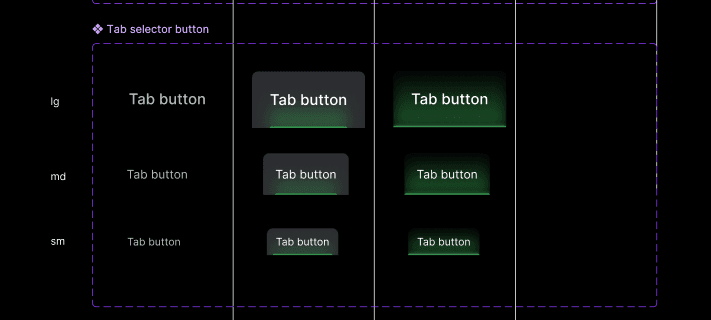
As the platform evolved into a configurable Industrial IoT ecosystem, consistency became essential. I designed and documented a comprehensive design system from the ground up, providing a scalable foundation for every module—from Digital Twin visualization and analytics to maintenance, administration, and AI-powered experiences. The system accelerated design, simplified development, and ensured a consistent experience across the entire platform.




The platform evolved from an internal concept into a production-ready Industrial IoT solution, providing manufacturers with a scalable foundation for digital plant monitoring, operational analytics, maintenance, and AI-assisted decision-making. By complementing SPRINGER’s automation solutions, it extends the value of every installed production line beyond the physical machinery itself.
Production-ready platform architecture
Scalable across multiple manufacturers
Modular Digital Twin framework
Configurable analytics and dashboards
Integrated maintenance workflows
AI-assisted operational insights
Built on a custom design system
Responsive across desktop, tablet, and mobile
One of the highlights of this project was visiting the client’s headquarters and seeing the platform running on a large operations display. After months of design, workshops, and collaboration, it was incredibly rewarding to see the product become part of a real manufacturing workflow.


Next

RLS 2.0
IoT Standalone

Operational Cost Optimisation
Foodchain Operations

Masinilacheie.ro
Car Rental - Web Based